How to Compress Images Without Losing Quality
You want to compress images without losing quality, but every time you try, the result looks blurry or pixelated. The issue is usually not the tool you are using. It is the settings. Most people compress too aggressively or use the wrong format for their image type.
This guide explains exactly how image compression works, which settings to use for different situations, and how to get the smallest possible file without visible quality loss.
How Image Compression Actually Works
Image compression comes in two types: lossy and lossless.
Lossy compression (used by JPG and WebP) analyzes your image and removes data that your eyes are least likely to notice. It looks at patterns of color and detail, then simplifies areas where you would not see the difference. The lower the quality setting, the more data it removes.
Lossless compression (used by PNG and WebP lossless) reorganizes the data more efficiently without removing anything. The file gets smaller, but every single pixel stays exactly the same. The tradeoff is that lossless compression produces larger files than lossy.
The Right Quality Setting for Every Situation
The magic number for most people is quality 80-85 for JPG and WebP. Here is why:
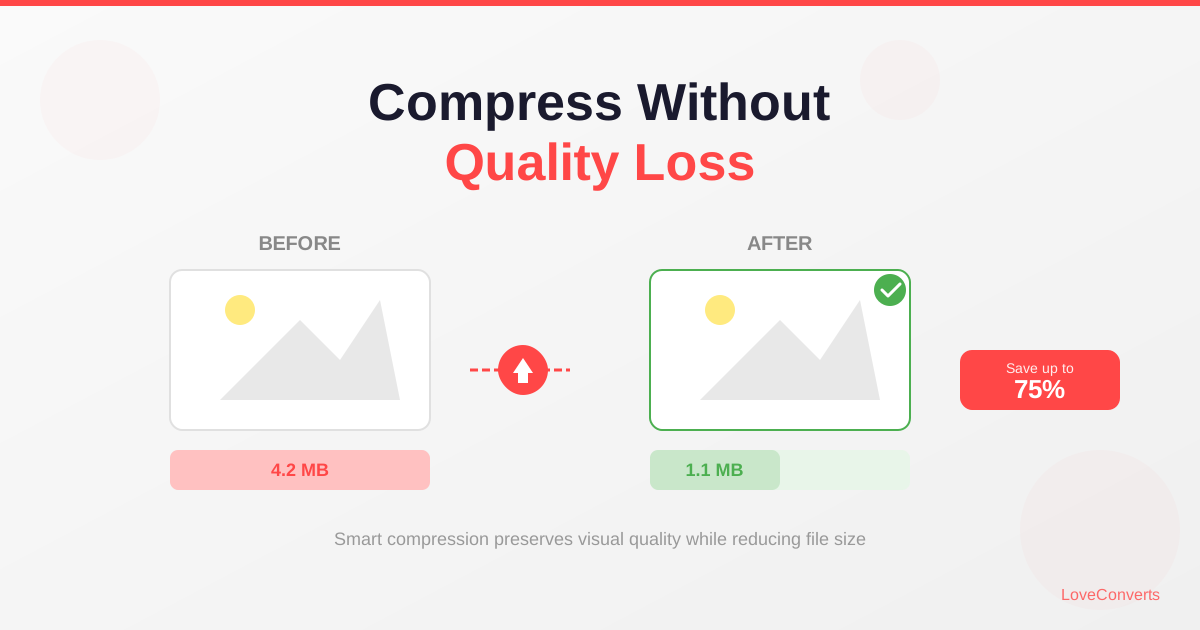
Below quality 75, compression artifacts become visible. You will see blocky patterns in gradients and soft areas. Above quality 90, the file size increases dramatically with almost no visible improvement. The 80-85 range hits the sweet spot where files are 60-70% smaller than the uncompressed original, and you cannot tell the difference without zooming way in.
Use the image compressor to try this yourself. Upload an image, and compare the compressed result side-by-side with the original. At quality 80, most people cannot identify which is which.
Pick the Right Format Before Compressing
The format you choose matters as much as the quality setting. Here is a quick guide:
- Photos and complex images: Use JPG or WebP. Both handle photographic content well. WebP gives you 25-35% smaller files than JPG at equal quality.
- Screenshots, text, and simple graphics: Use PNG. It handles sharp edges and solid colors better than JPG, which tends to create artifacts around text.
- Logos and icons with transparency: Use PNG or WebP. JPG does not support transparency at all.
- Maximum compression for modern websites: Use AVIF. It beats both WebP and JPG on file size, but encoding is slower and browser support, while good, is not yet universal.
If you are not sure which format to use, convert to WebP. It is the safest modern choice with universal browser support and excellent compression.
A Tip Competitors Miss: Resize Before You Compress
Most compression guides skip this, but it is the single biggest optimization you can make. If your image is 4000x3000 pixels but you are displaying it at 800x600 on a website, you are compressing 12 million pixels when you only need 480,000. Resize first, then compress.
Use the image resizer to scale down to the actual display size, then compress. A 4000x3000 JPG at quality 85 might be 1.5MB. That same image resized to 1200x900 and compressed to quality 85 will be around 120KB. That is a 92% reduction with zero visible quality loss at the display size.
Batch Compression: Processing Multiple Files
If you have a folder of photos to compress, doing them one at a time is painful. The LoveConverts compressor accepts up to 30 files at once. Upload the batch, and download all compressed images as a single ZIP file.
For ongoing work, establish a workflow: shoot or screenshot, resize to target dimensions, compress at quality 80-85, then upload to your site or send via email. This keeps your files consistently small without overthinking each one.
When NOT to Compress
A few situations where you should keep the original uncompressed file:
- Archival: If you might need to edit the image later, keep an uncompressed master copy. Each round of JPG compression degrades quality slightly.
- Print production: Printers need high-resolution, minimally compressed files. Use TIFF or PNG for print, not compressed JPG.
- Medical or scientific imaging: Any lossy compression could remove clinically relevant detail. Use lossless formats only.
For everything else, web pages, email attachments, social media posts, presentations, compress freely. The file size savings are worth it, and at quality 80+ nobody will notice the difference.