How to Convert Images to PDF for Free
There are many reasons you might need to convert image to PDF. Maybe you scanned several pages and need them in a single document. Maybe a client or employer requires photos submitted as PDF. Or maybe you want to combine a set of images into one file for easy sharing. Whatever the reason, converting images to PDF is straightforward and free.
This guide covers when image-to-PDF conversion is useful, how to do it step by step, and how to get the best quality and file size for your output.
When to Convert Images to PDF
PDF is the standard format for documents because it looks the same on every device, operating system, and printer. Converting images to PDF makes sense in several common situations:
- Scanned documents: You photographed or scanned multiple pages and need them in a single file. Insurance forms, receipts, contracts, and ID documents are commonly submitted this way.
- Photo portfolios: Combining photos into a PDF creates a presentation-ready file that can be emailed or printed as a booklet.
- Print preparation: Many print shops prefer or require PDF files. Converting your images to PDF with the correct page dimensions ensures they print at the right size.
- Archiving: A multi-page PDF is easier to organize than a folder of individual image files.
How to Convert Images to PDF (Step by Step)
Here is the process using the Image to PDF tool on LoveConverts:
- Upload your images. Click the upload area or drag your files in. You can upload multiple images at once. Supported formats include JPG, PNG, WebP, AVIF, GIF, TIFF, and BMP.
- Arrange the page order. Drag and drop the thumbnails to reorder pages. The order you set here is the order they will appear in the PDF.
- Choose your page size. Select A4 (210x297mm), US Letter (8.5x11 inches), or Auto-fit. Auto-fit sizes each page to match the image dimensions exactly, which is best when you do not plan to print.
- Select orientation. Portrait or landscape. If your images are a mix of both, auto-fit handles this automatically.
- Click Convert and download your PDF.
The conversion is fast, typically completing in 2-5 seconds even for 20+ images. No signup required, and no watermarks are added to the output.
Quality and File Size Considerations
The quality of your PDF depends on the quality of the source images. A high-resolution photo will produce a sharp PDF page. A small, low-resolution image will look pixelated when displayed at full page size.
For good print quality, your source images should be at least 300 DPI at the intended print size. For an A4 page, that means roughly 2480x3508 pixels. For screen viewing only, 150 DPI (1240x1754 pixels for A4) is sufficient.
If your images are large and the resulting PDF is too big for email (most email providers cap attachments at 25MB), you have two options:
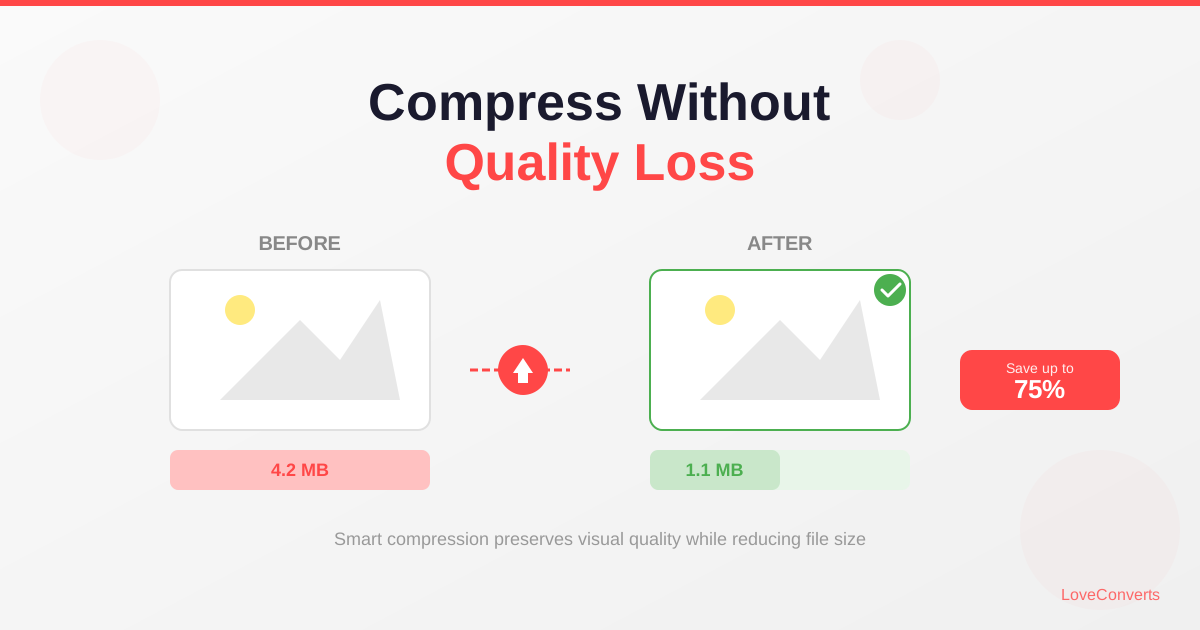
- Compress images first: Use the image compressor to reduce file size before converting to PDF. Quality 80% reduces file size significantly without visible quality loss.
- Resize images first: If you are creating a PDF for screen viewing, resize images to 1500-2000 pixels on the long side. This produces a much smaller PDF.
Reversing the Process: PDF to Images
Sometimes you need to go the other direction: extract images from a PDF. The PDF to Image tool converts each page of a PDF into an individual JPG or PNG image. This is useful when you receive a scanned document as PDF but need the individual page images for editing or uploading to a system that only accepts image files.
Both conversions are free and work entirely in the browser with no software installation needed.
Tips for Better PDF Output
A few practical tips for getting the best results:
- Consistent dimensions: If your images are all the same size, the PDF will look professional and uniform. Mixed sizes work fine with auto-fit, but the pages will have different dimensions.
- Crop before converting: Remove any unnecessary borders or whitespace from your images before combining them into a PDF. This produces cleaner pages.
- Use JPG for photos, PNG for documents: If your source images are photographs, JPG keeps file sizes manageable. If they are scanned text documents, PNG preserves text sharpness better.
- Check orientation: Phone photos sometimes have incorrect rotation metadata. If an image appears sideways in the PDF preview, rotate it before converting.
Converting images to PDF is one of those simple tasks that should not require expensive software or a subscription. Upload your images, arrange them, choose your settings, and download. That is all there is to it.