How to Optimize Images for Shopify
Your Shopify store's loading speed directly affects sales. Research consistently shows that slower pages mean fewer conversions. One of the biggest factors in page speed is image file size, and most Shopify store owners upload images that are far larger than necessary. Learning to properly optimize images for Shopify can cut your page load time in half without any visible quality difference.
This guide covers Shopify's recommended image specifications, the best formats to use, how to resize and compress, and a batch workflow for preparing dozens of product images at once.
Shopify Image Size Recommendations
Shopify has specific recommendations for product images:
- Maximum size: 4472 x 4472 pixels. Shopify will reject images larger than this.
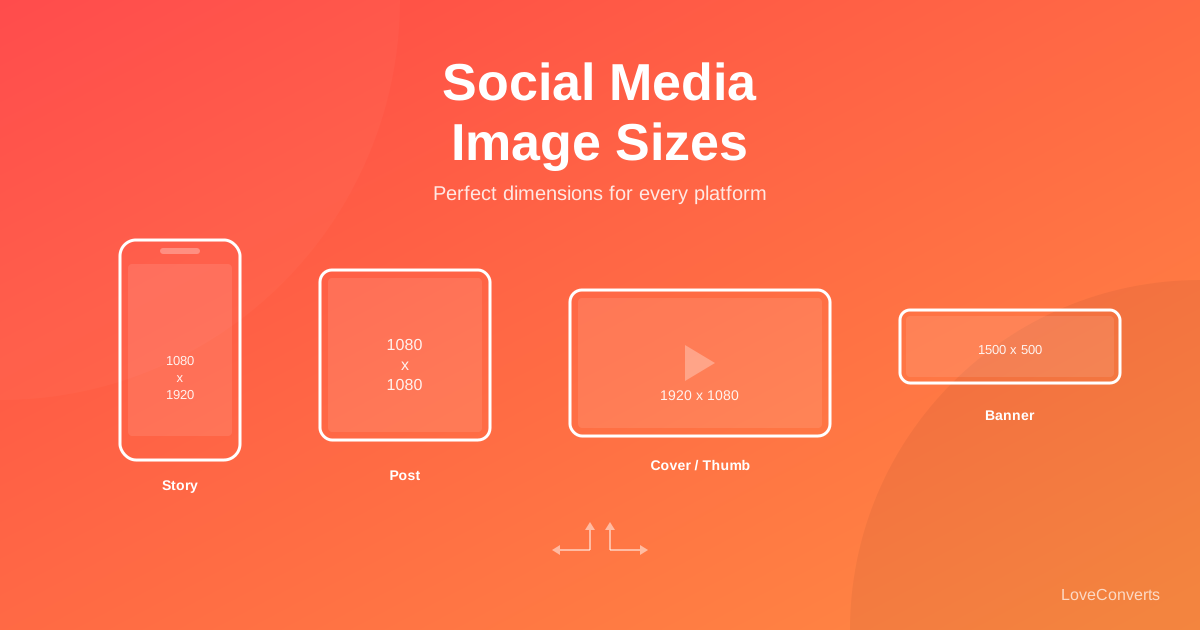
- Recommended size: 2048 x 2048 pixels. This is large enough for the zoom feature to work well, but not excessively large.
- Aspect ratio: Square (1:1) is recommended. Shopify displays product images in square containers by default. Non-square images will have white bars added to fill the space.
- File size limit: 20MB per image. But you should aim for well under 1MB per product image for fast loading.
Many cameras produce images at 6000x4000 pixels or larger. Uploading these directly to Shopify wastes bandwidth. The customer's browser downloads a 5MB image, then Shopify resizes it on the fly to fit the product page. That is wasted time and data.
Best Image Format for Shopify
Shopify accepts JPG, PNG, GIF, and WebP. Here is when to use each:
- JPG: Best for product photos. Smallest file size with good quality. Use for any image that is primarily a photograph.
- PNG: Use for logos, icons, and images that need transparent backgrounds. PNG files are larger than JPG, so only use it when transparency is needed.
- WebP: Shopify automatically converts uploaded images to WebP for browsers that support it. You do not need to upload WebP manually.
- GIF: Only for simple animations. Not recommended for product photos.
For 90% of product images, JPG is the right choice. Use the Convert to JPG tool if your images are in another format.
How to Resize Product Images
Resizing is the single most impactful optimization you can make. A 6000x4000 image resized to 2048x2048 reduces file size by roughly 75% before any compression is applied.
Using the Resize Image tool on LoveConverts:
- Upload your product image.
- Set dimensions to 2048x2048. If your image is not square, the tool can crop to fill or fit within the dimensions.
- Download the resized image.
For batch resizing, upload up to 30 images at once. Set the target dimensions once, and all images are resized and packaged into a ZIP download.
How to Compress Without Losing Quality
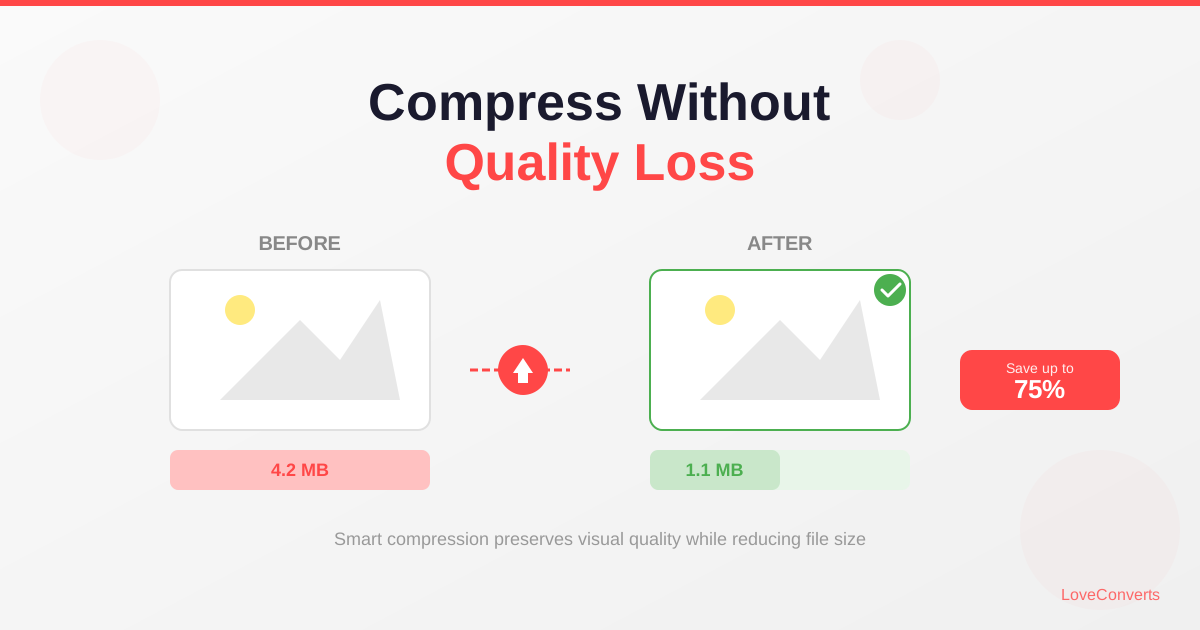
After resizing, compression reduces file size further by optimizing how the image data is stored. The Image Compressor handles this automatically.
For Shopify product images, aim for these targets:
- JPG quality: 80-85%. At this level, compression artifacts are invisible to the human eye, but file size drops by 50-70% compared to quality 100.
- Target file size: 150-400KB per image. A 2048x2048 JPG at 82% quality typically lands in this range.
- PNG files: Use PNG compression to reduce size while keeping lossless quality. Expect 20-40% reduction.
Do not compress below 75% quality for product photos. Customers zoom in on product images, and compression artifacts become visible at lower quality settings, especially on fabric textures, small text on packaging, and detailed patterns.
Complete Workflow for Preparing Shopify Images
Here is the full process for preparing a batch of product images:
- Shoot or collect your product photos. Use consistent lighting and a clean background (white is standard for most Shopify themes).
- Crop to square. If your camera shoots 3:2 ratio, crop to 1:1 before resizing.
- Resize to 2048x2048px using the Resize tool. Batch upload all images at once.
- Compress to 80-85% quality using the Compress tool.
- Upload to Shopify. Your images are now optimized and ready.
This workflow takes about 5 minutes for 30 images, and it can reduce your total image weight from 100MB+ down to under 10MB.
Image File Naming for SEO
A detail many store owners overlook: image file names affect SEO. Shopify uses the file name as the default alt text, and search engines read file names when indexing images.
- Bad: IMG_4521.jpg, DSC_0093.jpg, photo-1.jpg
- Good: blue-cotton-tshirt-front.jpg, leather-wallet-brown-open.jpg
Use descriptive, keyword-rich file names with hyphens between words. Include the product name, color, material, or angle. This helps your product images appear in Google Image search results, which can drive significant traffic to your store.
Rename your files before uploading to Shopify. Changing the name after upload does not update the URL Shopify assigns to the image.
Quick Reference Table
- Dimensions: 2048x2048px (square)
- Format: JPG for photos, PNG for logos
- Quality: 80-85%
- Target file size: 150-400KB
- Naming: descriptive-keywords-with-hyphens.jpg
Following these guidelines will keep your Shopify store fast, your images sharp, and your customers happy. For ongoing image preparation, bookmark the compress and resize tools on LoveConverts for quick access.