How to Convert RAW Photos to JPG Online
You just imported photos from your camera and every file is 25MB or more. You cannot email them. You cannot upload them to social media. Your friends cannot even open them on their phones. The files are in RAW format, and you need to convert RAW to JPG before you can share them with anyone. Here is how to do it for free, without installing Lightroom or any other desktop software.
What RAW Format Actually Is
RAW is not a single format. It is a category of formats used by different camera manufacturers to store unprocessed sensor data. When your camera shoots RAW, it saves everything the sensor captured, with no compression, no color adjustments, and no sharpening applied.
Common RAW formats include:
- CR2 / CR3: Canon cameras
- NEF: Nikon cameras
- ARW: Sony cameras
- DNG: Adobe's universal RAW format, also used by some phones
- ORF: Olympus cameras
- RW2: Panasonic cameras
- RAF: Fujifilm cameras
Each manufacturer has its own version of RAW, which is why you cannot open a CR2 file in a basic image viewer. The file contains raw sensor data that needs to be processed (or "developed") into a viewable image.
RAW vs JPG: What Is Different
Understanding the differences helps you decide when conversion makes sense:
- File size: A RAW file is typically 20-50MB. The same image as JPG is 2-8MB. That is a 5-10x reduction.
- Editing flexibility: RAW files contain much more data, giving you far greater control over exposure, white balance, and color in post-processing. JPG bakes these settings in permanently.
- Compatibility: JPG opens everywhere. RAW files require specialized software or viewer support.
- Quality: RAW captures 12-14 bits of color data per pixel. JPG captures 8 bits. For most viewing purposes, the difference is invisible, but it matters for professional editing.
In short: RAW is for editing, JPG is for sharing and viewing.
How to Convert RAW to JPG Online
Using the Convert to JPG tool on LoveConverts:
- Open the converter and upload your RAW file (CR2, NEF, ARW, DNG, or other supported format).
- Set the quality. For sharing on social media or via email, 85% is a good balance. For print or portfolio use, go with 90-95%.
- Click Convert and download the JPG file.
For batch conversion, upload up to 30 RAW files at once. All files are converted using the same quality setting and packaged into a single ZIP download. This is particularly useful after a photo shoot when you need to quickly deliver previews to a client.
Quality Settings Explained
When converting RAW to JPG, the quality setting determines how much compression is applied. Here is what the numbers mean in practice:
- 95-100%: Maximum quality. Files are larger (5-10MB). Use for prints and professional portfolios. Virtually indistinguishable from the RAW original.
- 85-92%: High quality. Files are moderate (2-5MB). Perfect for online portfolios, client galleries, and high-quality social media posts. No visible difference at normal viewing sizes.
- 75-84%: Good quality. Files are small (1-3MB). Fine for email attachments, web uploads, and general sharing. Slight softness visible only when zooming in to 200%+.
- Below 75%: Noticeable compression artifacts, especially in gradients (sky, skin tones) and detailed textures. Not recommended for photography.
For most photographers, 88-90% is the ideal setting. It produces files that look excellent at any normal viewing size while keeping file sizes manageable.
When to Keep RAW Files
Converting to JPG is the right move for sharing and delivery, but you should keep your original RAW files in these situations:
- You might edit them later. RAW files give you much more latitude for adjusting exposure, shadows, highlights, and color. If you convert to JPG and delete the RAW, that editing flexibility is gone permanently.
- Professional archive. Wedding photographers, event photographers, and studio photographers typically archive RAW files for years in case a client requests re-edits.
- High dynamic range scenes. Landscapes with bright skies and dark foregrounds benefit from RAW editing. You can recover highlight and shadow detail that JPG cannot preserve.
A practical approach: convert to JPG for immediate sharing and delivery, but store RAW files on an external drive for archival purposes. Storage is cheap compared to re-shooting.
After Converting: Optimizing for Specific Uses
Once your images are in JPG format, you may want to prepare them for specific platforms:
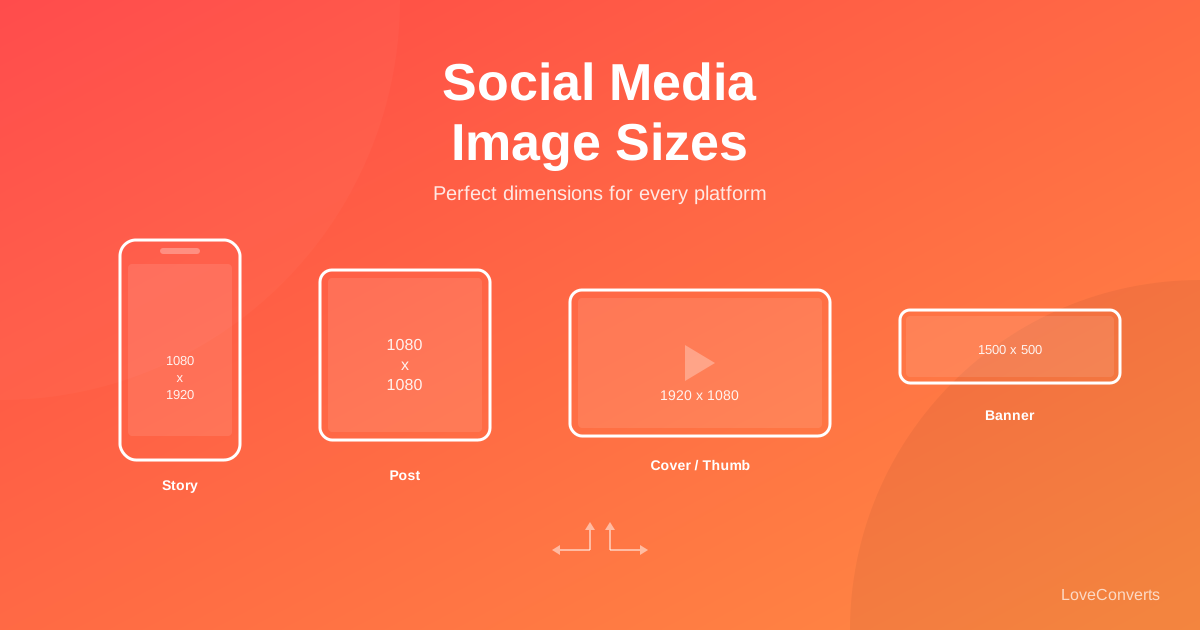
- Social media: Most platforms resize images automatically, but uploading at the right dimensions avoids unexpected cropping. Instagram works best at 1080x1080 (square) or 1080x1350 (portrait).
- Email: Keep images under 1MB each. Use the Image Compressor to reduce file size after conversion.
- Web galleries: Resize to 2000px on the longest side and compress to 80-85% quality. This balances image quality with page load speed.
- Print: Use 95%+ quality and keep the full resolution. Printing requires more detail than screen viewing.
The Convert to JPG and Compress tools on LoveConverts handle both steps. Convert your RAW files first, then compress the JPGs for your specific use case.