How to Fix Blurry Images Online
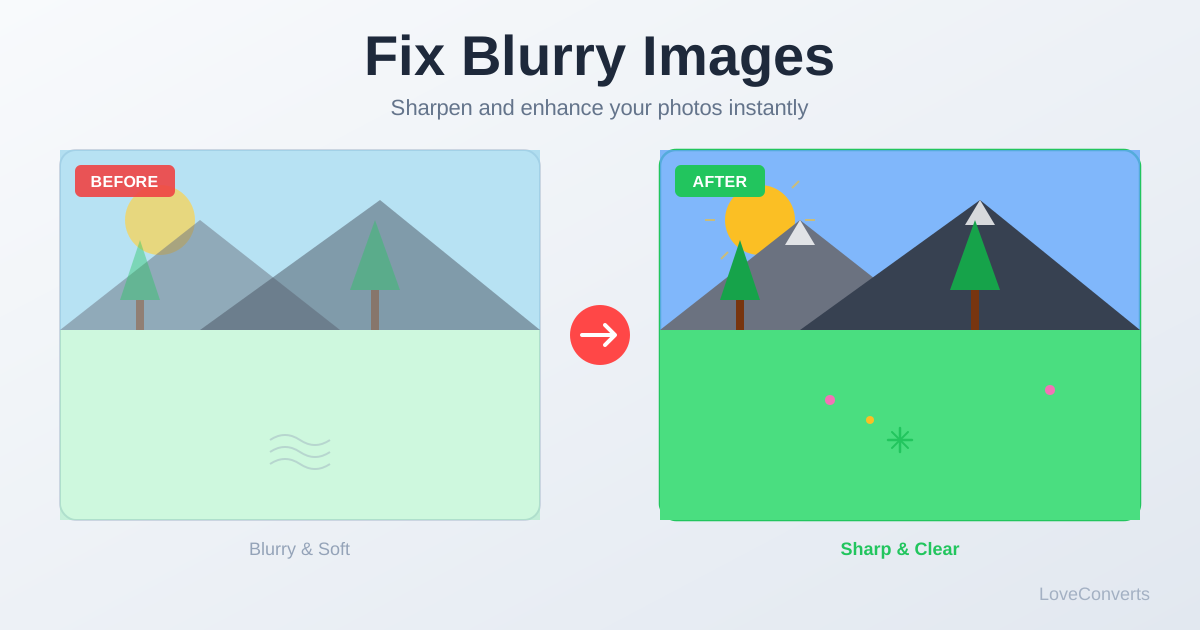
You took what should have been a great photo, but it came out blurry. Before you delete it, there are tools that can help. Fixing blurry images is possible in many cases, but the results depend entirely on what caused the blur and how severe it is.
This guide covers what works, what does not, and how to tell the difference.
What Causes Blurry Photos (and Which Are Fixable)
Not all blur is created equal. Understanding the cause tells you whether the photo can be rescued:
- Camera shake (fixable): The whole image is slightly soft in one direction. Sharpening tools handle this well because the detail is still there, just smeared slightly.
- Slight softness / low sharpening (fixable): The image looks a bit flat. This is the easiest type to fix with sharpening.
- Subject motion (partially fixable): The background is sharp but the subject is blurred from movement. Sharpening helps a little but cannot fully freeze motion after the fact.
- Out of focus (not fixable): If the camera focused on the wrong area, the blurred region genuinely lacks detail. No amount of sharpening can create detail that the lens did not capture.
- Heavy compression artifacts (partially fixable): Over-compressed JPGs look blurry and blocky. Sharpening can improve edges but makes the block artifacts more visible.
How to Sharpen Slightly Blurry Images
For images that are slightly soft (the most common and most fixable case):
- Open the AI Enhance tool.
- Upload your blurry photo.
- Select the "Sharpen" option.
- Download the result.
The enhance tool applies unsharp masking and adaptive sharpening that brings out edges and fine detail without creating harsh artifacts. For most slightly soft photos, this produces a noticeably improved result.
Using the Photo Editor for Manual Control
If you want more control over the sharpening amount, the photo editor has a sharpness slider. This lets you gradually increase sharpening and stop before it starts looking unnatural.
A few tips for manual sharpening:
- Start low. Apply a small amount of sharpening first. You can always add more.
- Watch for halos. Over-sharpened images develop bright outlines (halos) around edges. If you see halos, back off the sharpening.
- View at 100%. Sharpening effects are only visible at full resolution. Zoomed-out previews can be misleading.
When Upscaling Helps with Blur
The image upscaler uses Lanczos3 resampling with adaptive sharpening, which can improve slightly soft images as a side effect of the upscaling process. If your image is both small and slightly blurry, upscaling to 2x can actually make it look sharper at the original display size.
However, upscaling a severely blurry photo just gives you a larger blurry photo. The upscaler creates new pixels by interpolating existing ones. If the existing pixels are blurry, the new ones will be too.
When to Accept the Blur
Some photos cannot be saved. If the entire image is severely out of focus, no tool will fix it. The detail simply was not recorded by the camera. Signs that a photo is beyond repair:
- You cannot read text that should be readable
- Faces have no discernible features
- Edges look like they have been smeared with a finger
- The photo was taken in very low light with a phone camera
In these cases, your best option is to retake the photo with better conditions: more light, a steadier hand, or tap to focus on the correct area.
Preventing Blurry Photos in the First Place
- Hold your phone with both hands. Single-handed shooting causes more shake than you think.
- Tap to focus. Do not rely on autofocus. Tap the area you want sharp.
- Use burst mode. Take 5-10 shots and pick the sharpest one. At least one will usually be acceptably sharp.
- Clean your lens. Phone lenses get fingerprints and smudges that cause a soft haze. Wipe with a microfiber cloth.
- Avoid digital zoom. Digital zoom is just cropping, which degrades quality. Walk closer instead or crop afterward using the crop tool.