How to Generate Images with AI for Free
AI image generation turns text descriptions into original images. You type what you want to see, and a neural network creates it from scratch. If you want to generate images with AI free, you no longer need expensive software or subscriptions. Browser-based tools powered by models like FLUX produce high-quality results in seconds.
This guide explains how AI image generation works, how to write prompts that produce good results, and how to get the most from the free tools available.
How AI Image Generation Works
AI image generators use neural networks trained on billions of images. When you type a description (called a "prompt"), the model interprets your words and generates a new image that matches the description. It is not copy-pasting from existing images. The AI creates something original based on patterns it learned during training.
The FLUX model, which powers the AI Text to Image tool on LoveConverts, is one of the most capable open models available in 2026. It handles realistic photography, illustrations, digital art, and abstract styles with consistent quality.
Generating vs Editing: What Is the Difference
It is important to understand the distinction between generating and editing AI images:
- Generation (text-to-image): You start with nothing but a text description. The AI creates an entirely new image. Use this when you need original artwork, concept images, or visual content that does not exist yet.
- Editing (image-to-image): You start with an existing photo and give the AI instructions to modify it. "Remove the background," "change the sky to sunset," or "make it look like a watercolor painting." The AI Image Editor handles this type of task.
Most people start with generation and then use editing to refine the results or modify existing photos they already have.
How to Write Effective Prompts
The quality of your generated image depends almost entirely on how you write the prompt. Vague prompts produce generic results. Specific prompts produce images that match what you actually want. Here is a framework for building good prompts:
1. Start with the subject: What is the main thing in the image? A person, an animal, a building, a landscape, an object? Be specific. "A golden retriever puppy" is better than "a dog."
2. Add the setting or environment: Where is the subject? A forest, a city street, a studio backdrop, outer space? Context matters for composition and lighting.
3. Describe the lighting: Lighting sets the mood more than almost anything else. "Golden hour sunlight," "harsh overhead lighting," "neon glow," "soft diffused light," or "dramatic side lighting" all produce very different results.
4. Specify the style: Do you want a photograph, a watercolor painting, a pencil sketch, pixel art, or a 3D render? Without a style instruction, the AI defaults to a general realistic look.
5. Add mood or atmosphere: "Cozy," "mysterious," "energetic," "melancholic," or "serene" gives the AI direction for color palette and composition.
Here is an example of a basic prompt versus an improved one:
- Basic: "a mountain landscape"
- Improved: "snow-capped mountain range at sunrise, golden light on peaks, misty valley below, pine forest in foreground, realistic landscape photography, wide angle"
The improved prompt will produce a dramatically more compelling image because the AI has specific direction for every visual element.
Aspect Ratios and Dimensions
Different use cases call for different image proportions:
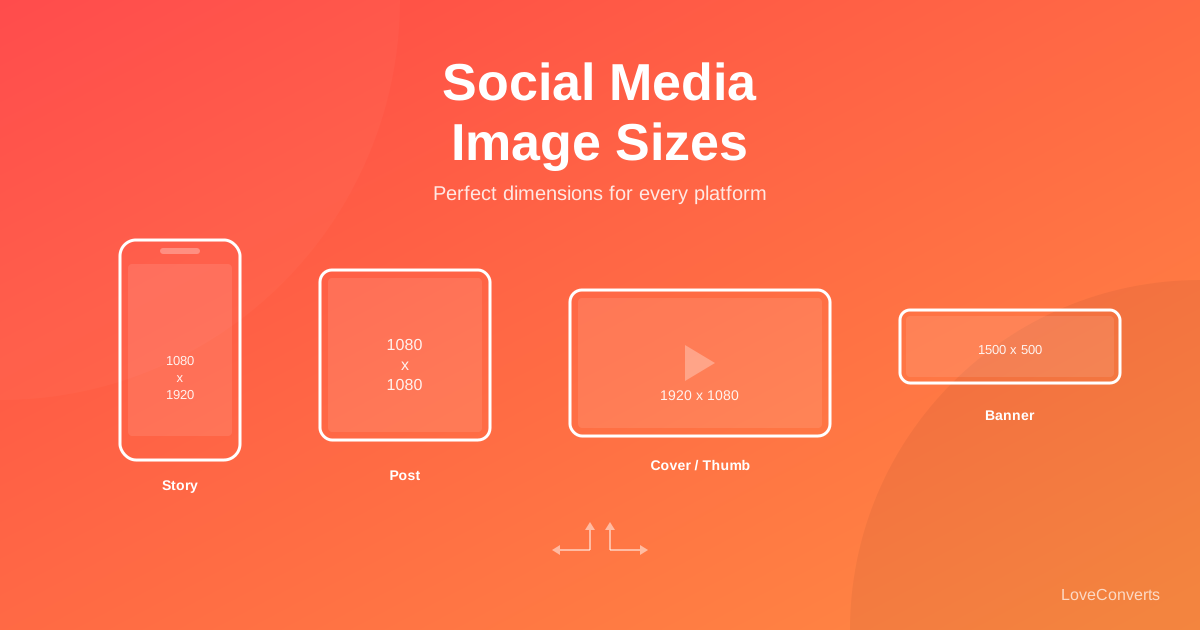
- Square (1:1): Instagram posts, profile pictures, thumbnails
- Landscape (16:9): YouTube thumbnails, website banners, desktop wallpapers
- Portrait (9:16): Phone wallpapers, Instagram Stories, Pinterest pins
- Standard photo (4:3 or 3:2): General photography, blog images
Setting the right aspect ratio before generating saves you from cropping later, which can cut off important parts of the composition.
Step by Step: Your First AI Image
- Open the AI Text to Image tool
- Write your prompt using the framework above. Start with something specific rather than abstract.
- Choose your aspect ratio based on where you plan to use the image
- Click Generate and wait 3-8 seconds
- Review the result. If it is not quite right, adjust your prompt and generate again. Small wording changes can produce very different results.
- Download your image when you are satisfied
What to Do With Generated Images
Generated images work well for blog post headers, social media content, presentation slides, concept art, and placeholder images for mockups. If the generated image is close but needs minor adjustments, open it in the AI Image Editor to make targeted changes without regenerating from scratch.
For web use, consider running your generated image through the image compressor to reduce file size. AI-generated images are typically saved at high quality and can often be compressed by 50-70% without visible quality loss.
Keep in mind that AI generation is not perfect. Hands and text in images may have artifacts, and very specific compositions (like "exactly five apples in a row") can be inconsistent. For these cases, generating several versions and picking the best one is the most reliable approach.