How to Make an Image Background Transparent
You have a photo and you need to remove the background so it becomes transparent. Maybe it is a product shot for your online store, a headshot for a presentation, or a logo that needs to sit on different colored backgrounds. Whatever the case, you want to make image background transparent without opening Photoshop or paying for expensive software.
This guide covers how AI background removal works, step-by-step instructions, tips for best results, and what to do with the transparent image afterward.
What a Transparent Background Actually Means
When an image has a transparent background, the area behind the main subject contains no color data. Instead of white, black, or any other color, those pixels are simply empty. When you place a transparent image on a website, slide, or design, whatever is behind it shows through.
Transparency is stored in what is called an alpha channel. Not all image formats support it. PNG does. JPG does not. WebP does. GIF supports simple transparency (a pixel is either fully transparent or fully opaque, no in-between). For high-quality results, PNG is the standard output format.
How AI Background Removal Works
Older tools required you to manually trace around the subject with a selection tool. That process was slow, tedious, and produced rough edges, especially around hair and fine details.
Modern tools use AI models trained on millions of images to detect the subject automatically. The AI identifies what is "foreground" (the person, product, or object) and what is "background" (everything else), then removes the background in one step.
The results are significantly better than manual selection for most images. The AI handles hair strands, semi-transparent objects, and complex edges much more accurately than the average person using a manual selection tool.
Step-by-Step: Removing the Background
Using the Remove Background tool on LoveConverts:
- Upload your image. JPG, PNG, and WebP are all accepted.
- Wait for processing. The AI analyzes the image and removes the background. This typically takes 2-5 seconds.
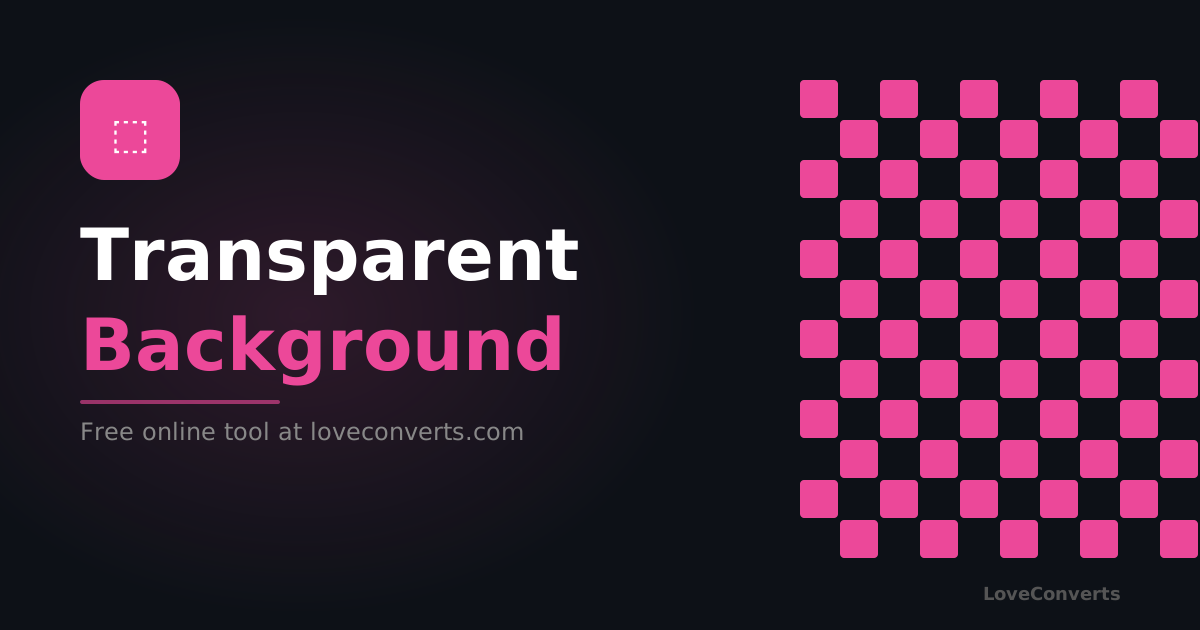
- Review the result. The preview shows your subject on a checkerboard pattern, which represents transparency.
- Download the PNG. The output is always PNG format, since it supports the transparent alpha channel.
No account required, no watermark added, no daily limits.
Tips for Best Results
AI background removal works well in most cases, but some images produce better results than others. Here is how to get the cleanest output:
- High contrast between subject and background. A person standing in front of a solid colored wall works perfectly. A person wearing a green shirt standing in a forest is harder.
- Good lighting. Well-lit photos with clear shadows produce better results. Dark, underexposed images make it harder for the AI to distinguish edges.
- Clear subject. One main subject works best. Group photos with overlapping people may have imperfect edges.
- Higher resolution is better. More pixels give the AI more information to work with, especially around fine details like hair.
Even with challenging images, the AI usually gets 95% of the way there. Minor cleanup can be done in the Photo Editor if needed.
Common Use Cases
Transparent backgrounds are useful in many situations:
- Product photography: E-commerce platforms like Amazon, Shopify, and Etsy prefer product images on white or transparent backgrounds. Remove the original background, then place the product on pure white for a clean listing.
- Logos: A logo with a transparent background can be placed on any colored surface, website header, or document without a visible box around it.
- Headshots: Professional headshots often need background removal for company websites, ID badges, or social media profiles.
- Stickers and decals: Creating digital stickers for messaging apps requires transparent backgrounds.
- Presentations: Placing a person or product on a slide without a rectangular photo frame looks more polished.
What to Do After Removing the Background
Once you have your transparent PNG, there are several next steps depending on your goal:
- Add a solid color background: Use the Photo Editor to add a white, black, or branded color behind the subject.
- Place on a design: Import the transparent PNG into Canva, Figma, or PowerPoint. It will sit on top of your design without any background box.
- Use as-is: For websites, transparent PNGs work directly. Upload to your CMS and the page background will show through.
- Convert format: If you need JPG (which does not support transparency), the transparent areas will become white. Use the JPG to PNG converter if you ever need to go the other direction.
One important note: transparent PNG files are larger than JPG files of the same image. If file size is a concern (for example, on a website where page speed matters), consider compressing the PNG after removing the background. The image compressor can significantly reduce PNG file sizes while keeping the transparency intact.