How to Reduce Screenshot File Size
You just took a screenshot on your Mac and the file is 8MB. You need to email it, upload it to a support ticket, or add it to a document, but the file size limit is 5MB. This is a common problem, especially on Macs with retina displays. Here is how to reduce screenshot file size quickly, without making the text blurry or unreadable.
Why Screenshots Are So Large
Modern screenshots are larger than most people expect, and there are two main reasons for this.
Retina displays double the resolution. If your Mac has a retina display (and most modern Macs do), screenshots are captured at 2x resolution. A screenshot of a 1920x1080 screen is actually saved as a 3840x2160 image. That is over 8 million pixels, and at PNG quality, the file can easily be 5-10MB.
PNG format preserves everything. Both Mac and Windows save screenshots as PNG files by default. PNG uses lossless compression, which means every pixel is stored exactly. For photographs, JPG achieves much smaller sizes by discarding invisible details. But screenshots are saved as PNG because it preserves sharp text edges perfectly.
The combination of high resolution and lossless format creates files that are much larger than necessary for most uses.
Method 1: Compress the PNG
The fastest way to reduce a screenshot file is to compress the PNG without converting it. The Image Compressor on LoveConverts optimizes PNG files by reducing redundant data while keeping the image visually identical.
- Open the Compress Image tool.
- Upload your screenshot.
- Download the compressed file.
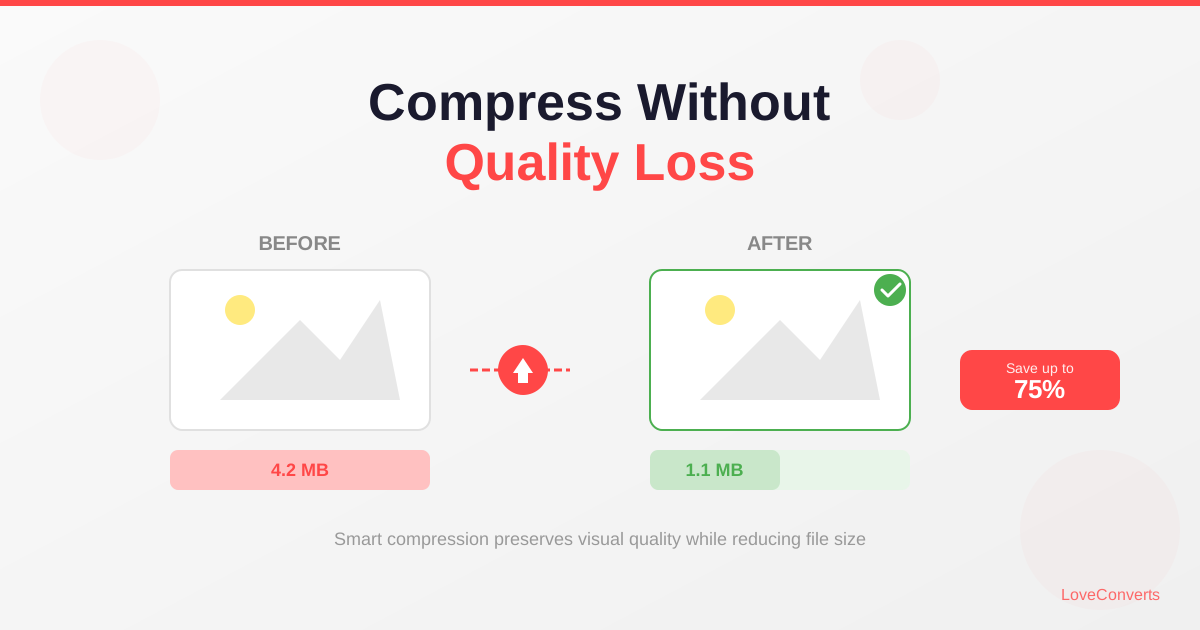
Typical results: a 6MB screenshot compresses to 2.5-3.5MB. That is a 40-60% reduction with no visible quality loss. Text stays sharp, colors stay accurate, and the image dimensions remain the same.
This method is best when you need to keep the PNG format (for example, if you are pasting into a design tool or documentation that expects PNG).
Method 2: Convert to JPG
If you do not need PNG specifically, converting the screenshot to JPG produces dramatically smaller files. JPG uses lossy compression, which can reduce file size by 70-80% compared to the original PNG.
Using the Convert to JPG tool:
- Upload your PNG screenshot.
- Set quality to 85% or higher (to keep text readable).
- Download the JPG file.
A 6MB PNG screenshot typically becomes a 700KB-1.2MB JPG at 85% quality. That is a massive reduction.
The tradeoff: JPG compression can create slight artifacts around sharp text edges. At 85% quality or higher, this is barely noticeable. At 70% or lower, text starts looking fuzzy, especially small text. For screenshots that contain mostly UI elements and text, keep the quality at 80% minimum.
When to Keep PNG vs Convert to JPG
Here is a simple guide for choosing:
- Keep PNG when: The screenshot contains small text that must stay crisp, code editor screenshots, UI mockups going to designers, or documentation where precision matters.
- Convert to JPG when: The screenshot shows a video, a photo-heavy website, a map, or anything where slight softness is not noticeable. Also fine for screenshots going into emails, chat messages, or support tickets.
If the screenshot is of a mostly white UI with small text (like a spreadsheet or code editor), PNG compression is the safer choice. If the screenshot is of a colorful website or an app with large UI elements, JPG works perfectly.
Batch Compressing Multiple Screenshots
If you need to reduce the file size of many screenshots at once (common for documentation projects, bug reports, or tutorial creation), both the compressor and converter support batch processing. Upload up to 30 screenshots, process them all at once, and download a single ZIP file.
This is significantly faster than compressing one file at a time, especially when you are preparing 20+ screenshots for a user guide or training document.
Other Ways to Get Smaller Screenshots
Beyond compression and conversion, there are a few other strategies worth considering:
- Crop before saving. If you only need to show part of the screen, crop the screenshot first. Half the pixels means roughly half the file size.
- Resize the dimensions. A retina screenshot at 3840x2160 can be resized to 1920x1080 and still look sharp on most screens. This alone cuts file size by about 75%.
- Use the right tool for the job. For quick annotations and sharing, tools like CleanShot X (Mac) or ShareX (Windows) let you set default quality and format preferences so screenshots are smaller from the start.
For most people, the fastest solution is to upload the screenshot to the compressor, let it optimize, and download the result. Takes about 10 seconds and usually gets the file under any reasonable size limit.